MEP shows great commitment to model aircraft flying – safety concerns dominate the European Commission’s stance – key discussions scheduled for 21 October
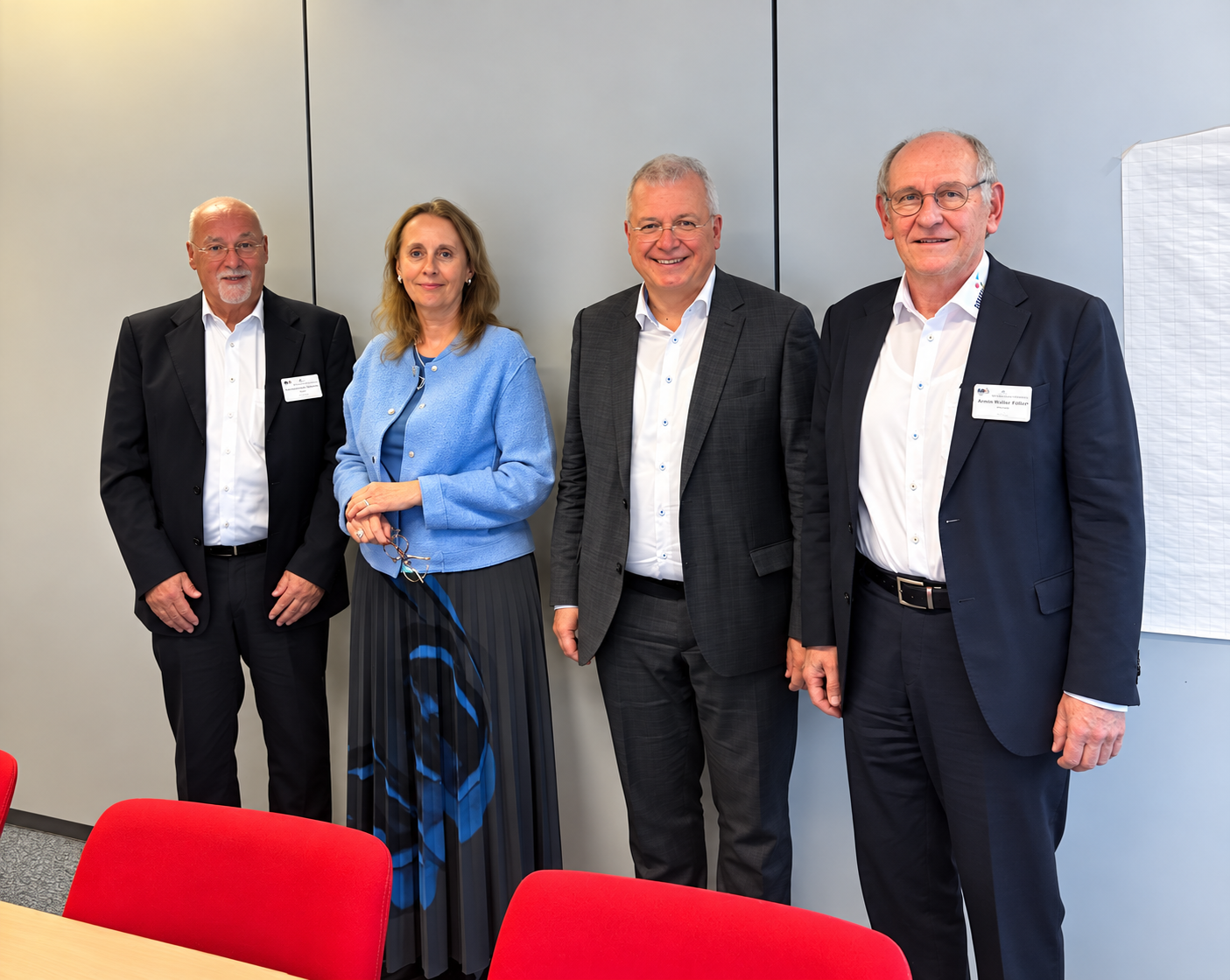
On 13 October 2026, an important meeting took place in Brussels regarding the future of model flying in Europe. On the initiative of, and with the key involvement of, MEP Markus Ferber, DMFV President Hans Schwägerl and the DMFV’s International Affairs Officer, Achim Friedl, met with Dr Christine Berg, Head of Unit for Aviation Safety at the European Commission’s Directorate-General for Mobility and Transport (DG MOVE). The focus was on the planned tightening of European drone regulations and their potentially existential threat to traditional model flying.
Markus Ferber shows exceptional commitment to model flying
Markus Ferber demonstrated considerable personal commitment in the run-up to and during the meeting, championing the interests of model flyers in Germany and across Europe. He had previously raised the DMFV’s concerns with the European Commission and advocated for the maintenance of appropriate regulatory conditions.
This commitment led, amongst other things, to a personal reply from the responsible EU Transport Commissioner, Apostolos Tzitzikostas. In it, the Commissioner expressly acknowledges Ferber’s long-standing commitment and the social significance of model aircraft flying. He states that it is far more than just a leisure activity and, in particular, opens up access for young people to aviation, technology and engineering professions.

Markus Ferber – Member of the European Parliament
Difficult discussions – military security interests dominate the debate
Despite Markus Ferber’s great commitment, the discussion with Christine Berg proved extremely difficult. From the perspective of the DMFV representatives, it became clear that the European Commission’s thinking is largely shaped by security policy considerations. In particular, the discussion centred on protecting critical infrastructure and military installations in EU Member States from threats posed by drones.
Against this backdrop, there appears to be limited willingness to distinguish sufficiently between drone operations that could pose a security risk and traditional model flying, which has been practised responsibly for decades.
This is precisely where the particular danger lies: regulations designed to counter security-related drone threats could burden the entire aeromodelling sector with far-reaching technical and administrative requirements.
Additional equipment requirements, bureaucratic hurdles and restrictions on existing operating conditions could not only affect individual aeromodellers, but also weaken clubs, youth development programmes and voluntary structures in the long term. It would be particularly problematic if, in future, traditional model aircraft could only be flown under conditions that are technically unfeasible or economically disproportionate. For many model aircraft enthusiasts, this could effectively spell the end of their current sporting activities.
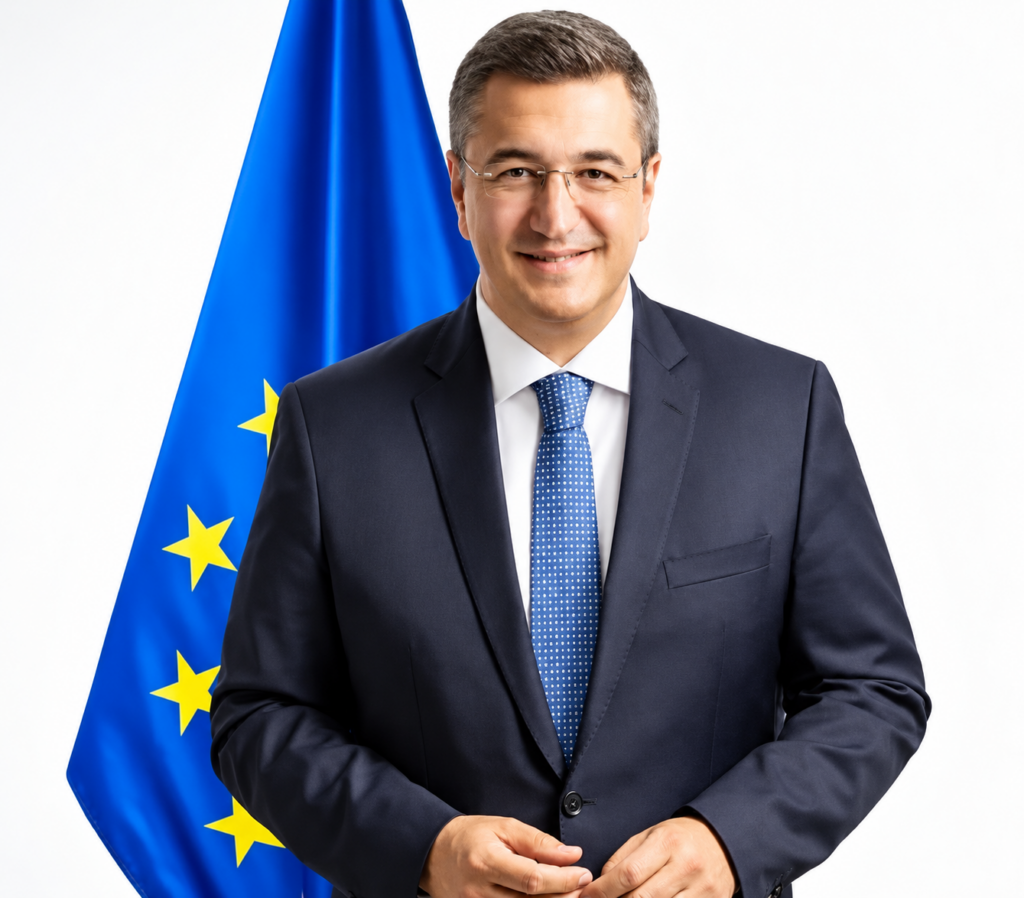
Apostolos Tzitzikostas – EU Transport Commissioner
EU Commissioner holds out hope for exemptions – fundamental concerns remain
Transport Commissioner Apostolos Tzitzikostas had already set out the European Commission’s fundamental position in his letter to Markus Ferber. In it, he assures that the Commission does not wish to impose disproportionate burdens on model aircraft flying. At the same time, it is committed to additional safety measures designed, in particular, to improve the identification of unmanned aircraft and to protect sensitive areas such as airports and critical infrastructure.
With regard to organised model aircraft flying, Tzitzikostas refers to Article 16 of the EU Implementing Regulation 2019/947. Under this provision, Member States may continue to authorise model aircraft operations within the framework of clubs and associations on the basis of national regulations or established internal association procedures.
Furthermore, the EASA draft legislation provides that Member States may exempt model aircraft from the mandatory direct remote identification (Remote-ID) requirement under the relevant Article 16 authorisations. However, these are merely possible national exemptions and do not constitute a general exemption of traditional model aircraft flying from the planned safety regulations.
A separate European regulatory category for model aircraft proposed by EMFU and DMFV is not being pursued further in the current procedure. The Commission considers the retention of Article 16, with additional national exemption options, to be an appropriate approach.
From the DMFV’s perspective, this is not sufficient. National exemptions offer no guarantee of reliable and workable framework conditions across Europe. Furthermore, it remains unclear under what conditions model aircraft enthusiasts will be able to practise their sport in future without the relevant authorisations from federations and clubs.
As a result, traditional model aircraft flying risks becoming increasingly dependent on special national regulations. Opportunities to fly that have hitherto been taken for granted could be significantly restricted or even lost entirely.
As early as 21 October: Important deliberations in the EASA Committee
The situation is made particularly urgent by the imminent deliberations at European level.
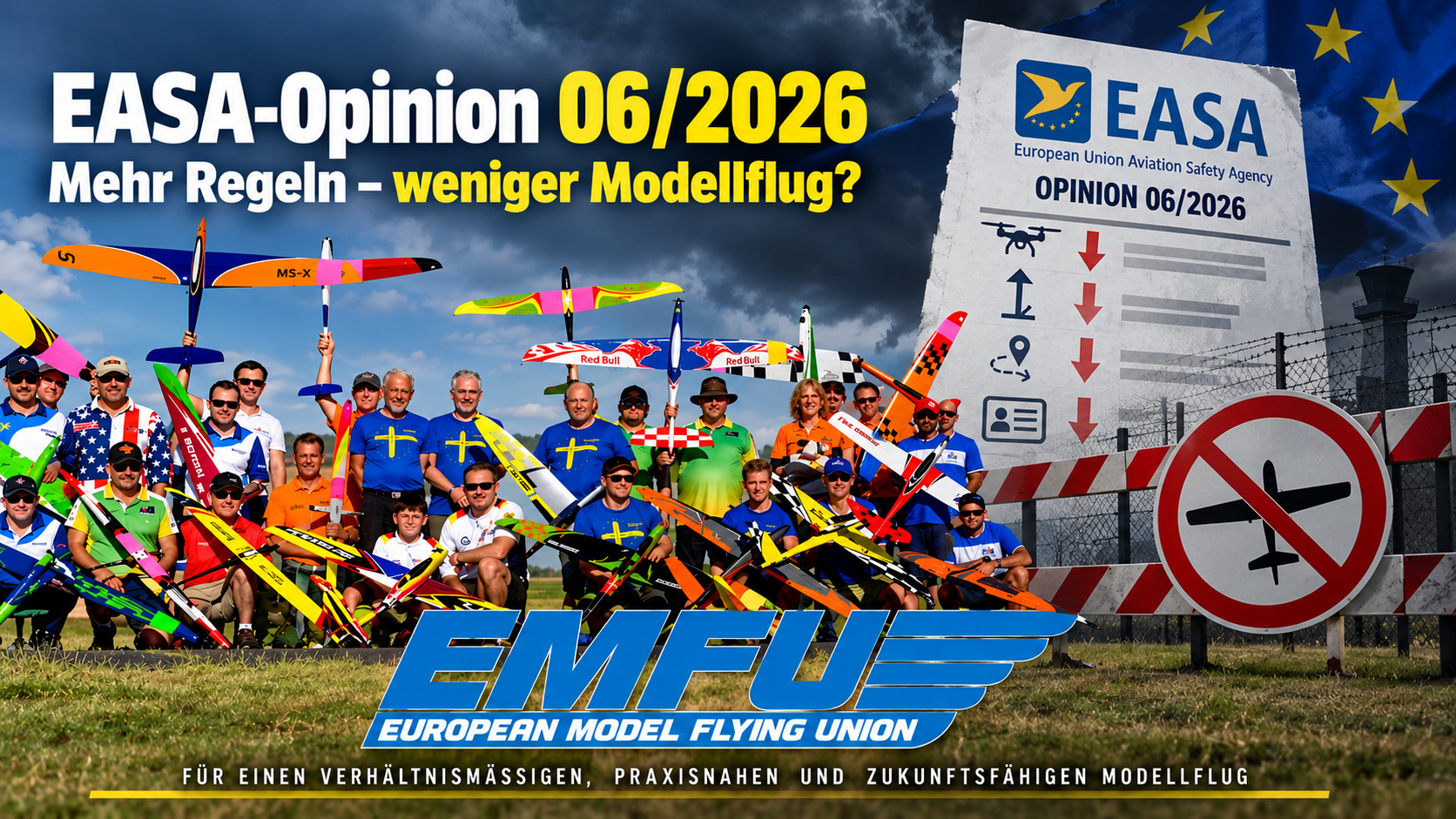
On 21 October 2026, the EASA Committee will meet. According to information available to the DMFV, the European Commission intends to seek confirmation of the proposed safety measures from the representatives of the Member States at that meeting.
This could mark a decisive turning point for the future of model flying in Europe. If the measures are pursued without taking sufficient account of the sport’s specific operating practices and tried-and-tested safety structures, there is a risk of serious and potentially irreversible consequences.
“This is not merely a matter of additional regulations, but of the fundamental question of under what conditions traditional model flying in Europe will even be possible in future,” warns DMFV President Hans Schwägerl.
All European model flying associations must now take action
In light of this development, model flying associations in all EU Member States bear a special responsibility. The DMFV considers it urgently necessary for all European model flying associations to contact their respective national aviation authorities (NAAs) before 21 October.
In doing so, the potentially drastic consequences of the planned measures must be made clear. Safety requirements designed to prevent the misuse of drones must not be applied indiscriminately to traditional model flying. The tried-and-tested safety standards of organised model flying, as well as the impact on clubs, the promotion of young talent and voluntary structures, must be given due consideration.
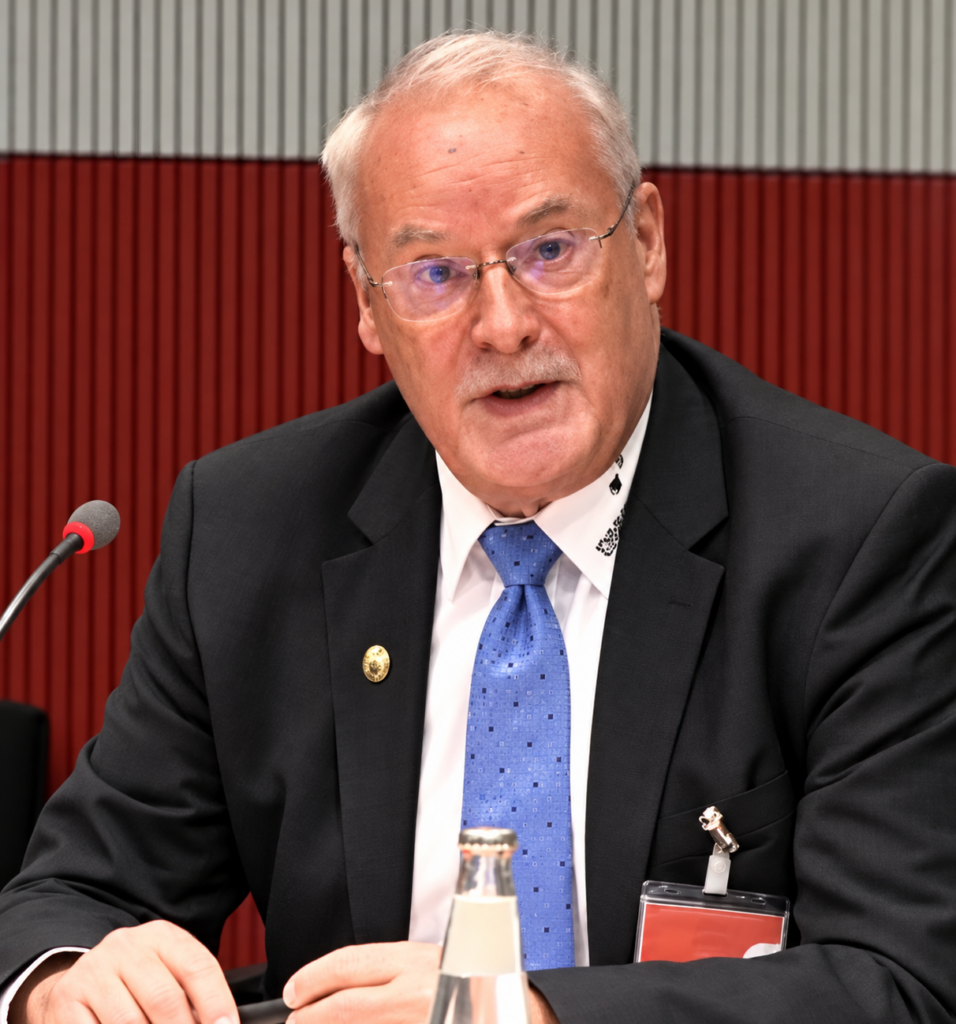
Hans Schwägerl – DMFV President

Achim Friedl – International Affairs Officer
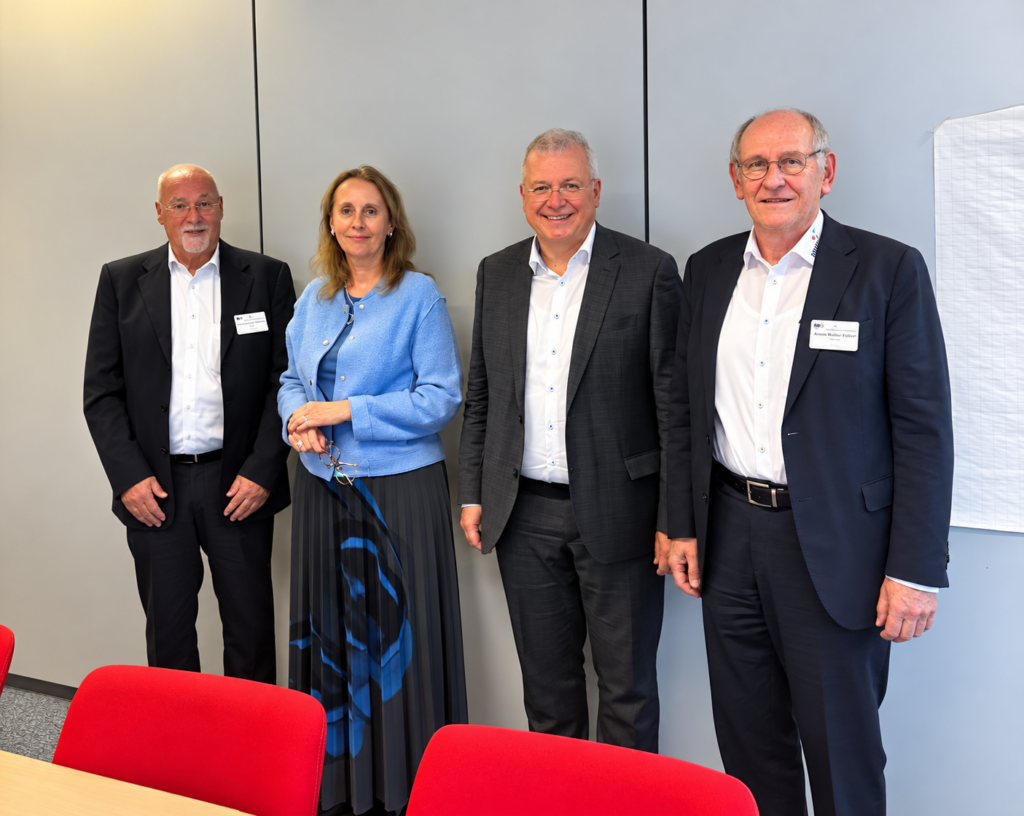
v.l.n.r.: Hans Schwägerl, Dr. Christine Berg, Markus Ferber, Achim Friedl
It is hoped that the representatives of the Member States on the EASA Committee will recognise the far-reaching implications of the proposed regulations and call for further technical discussions, with the explicit involvement of the relevant European model flying associations, before far-reaching decisions are taken.
DMFV plans to write to European Commission President Ursula von der Leyen
In parallel with these efforts, the DMFV plans to address a letter directly to European Commission President Ursula von der Leyen.
In this letter, the association intends to highlight the specific concerns of traditional model aircraft flying and the need for differentiated regulation at the highest European level. At the same time, however, it also aims to make clear that Member States already have effective means at their disposal to detect and counter dangerous drones without placing an undue burden on or unduly restricting model aircraft flying.
DMFV continues its work at European level
The meeting in Brussels highlighted just how difficult it is to assert the interests of model flying against the security considerations that currently dominate the debate. This makes the exceptional commitment of Markus Ferber and the close cooperation between European model flying associations all the more important.
The DMFV will continue to campaign vigorously for appropriate, practical and proportionate regulatory frameworks.
The DMFV President warns: “The coming days will be decisive. Member States must recognise the potential consequences of the planned measures and work towards a thorough review involving the relevant associations.”
For, despite all legitimate concerns regarding the safety of European airspace, one thing must not be lost sight of: traditional model flying is not the threat against which European security measures must be directed. It must therefore not become a victim of these measures either.